Education
Learn watershed modeling
A growing curriculum on how water moves — and how it is modeled. Every lesson runs on real SWATGenX model output, not canned animation, and every number's source is shown on the page.
Most explanations of the water cycle are diagrams that could describe anywhere. These are different: each lesson runs on the actual output of a SWATGenX model of a real place, so the splits you watch — how much rain runs off, soaks in, recharges the aquifer, or returns as baseflow — are the numbers the model produced, labeled with where they came from.
The curriculum is organised into branches. Each one starts from a physical idea, then shows how that idea is turned into a running model — and the branches deepen as we generate more results.
- 19 lessons
- Real model output
- Every number sourced
How water moves
Rain, runoff, rivers — and where a drop actually ends up
The physical ideas everything else rests on: where a year of rain goes, how long water takes to cross a continent, and why a ridge line decides which ocean a raindrop belongs to.
The Water Journey
Release drops over a real American basin and watch a SWAT+ water balance emerge — canopy, runoff, soil, aquifer, stream.
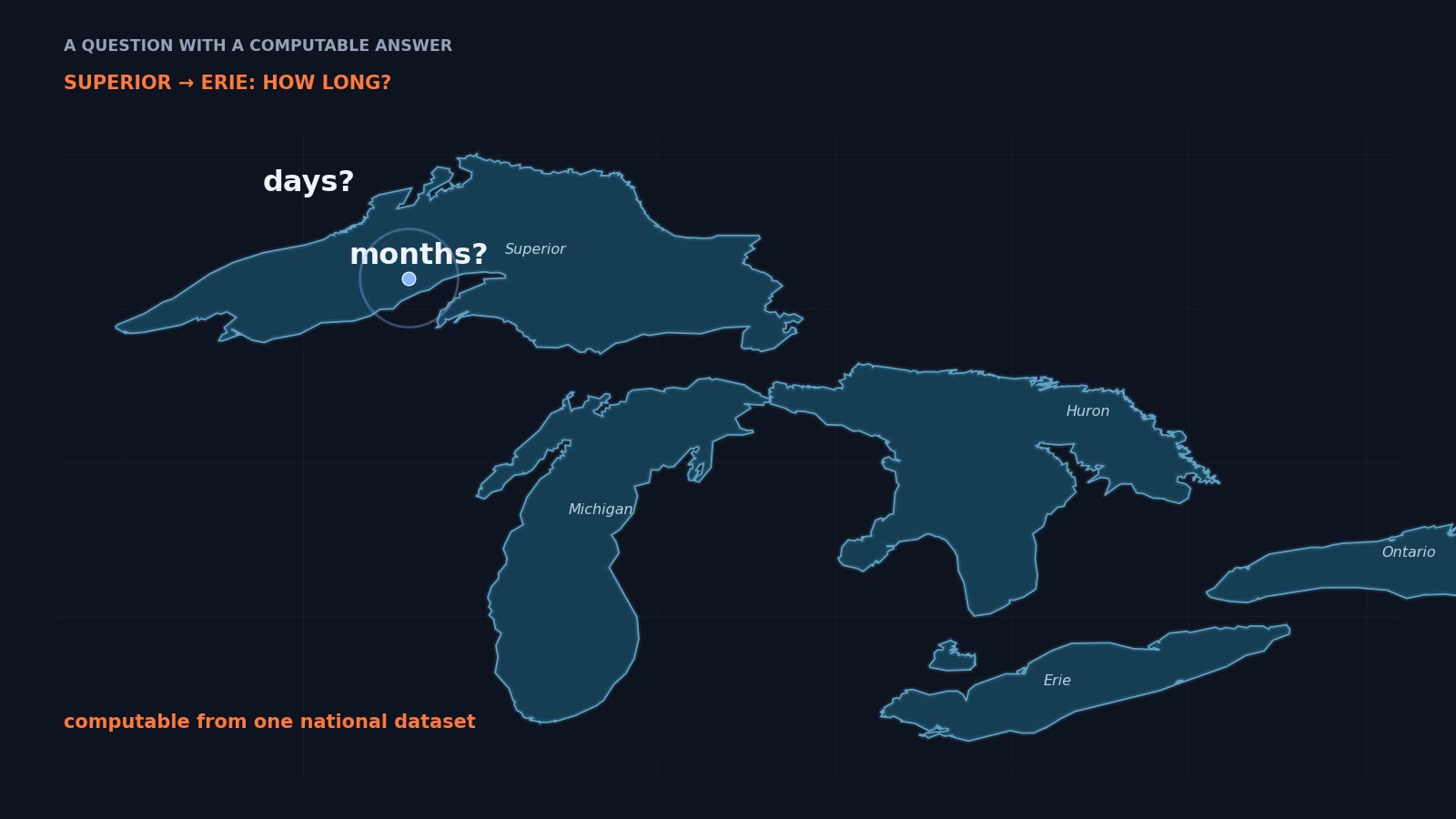
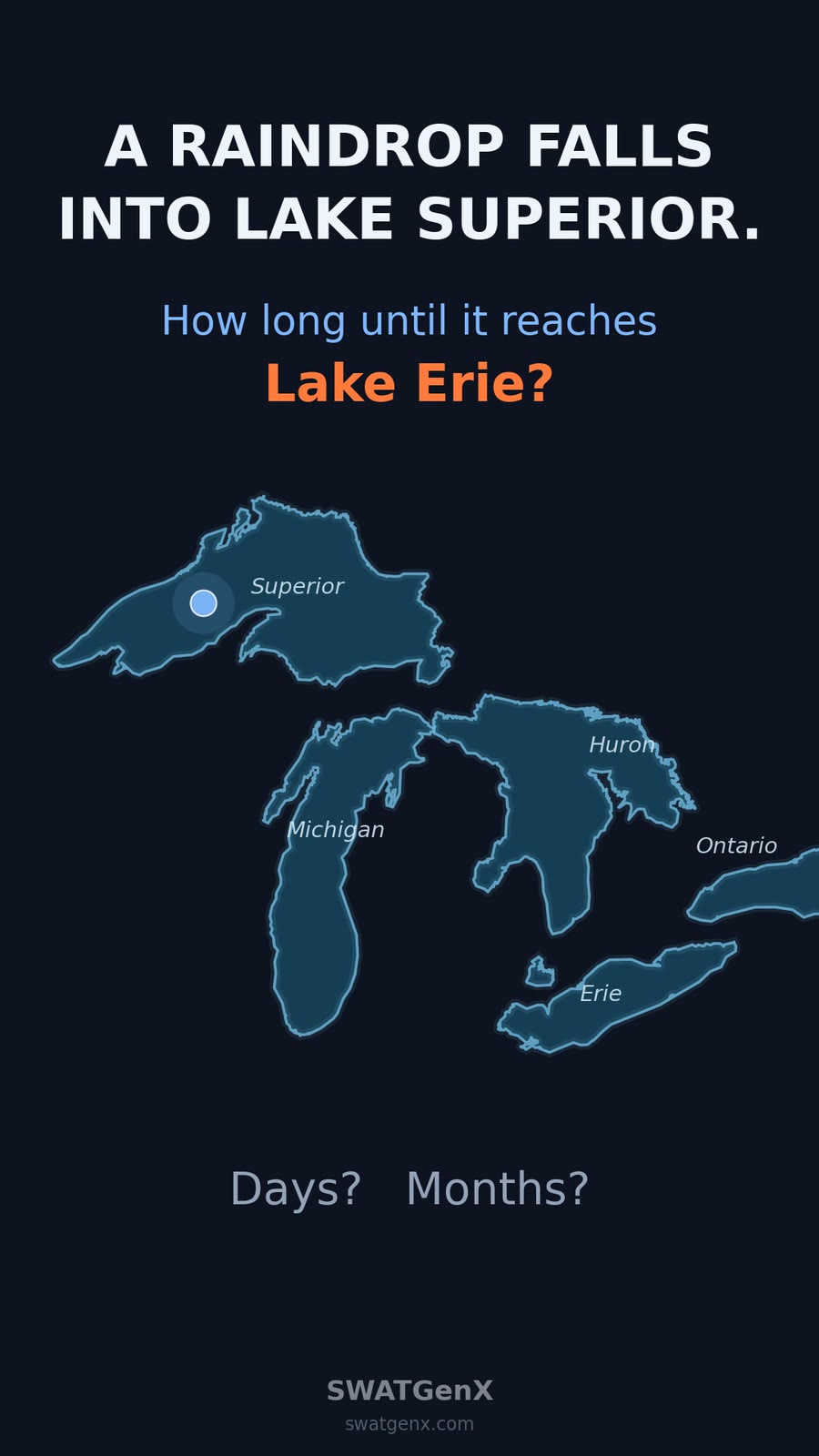
OpenHow Long Does a Drop of Water Take From Lake Superior to Lake Erie?
About 190 years from Lake Superior to Lake Erie — and only three days of it spent in rivers.
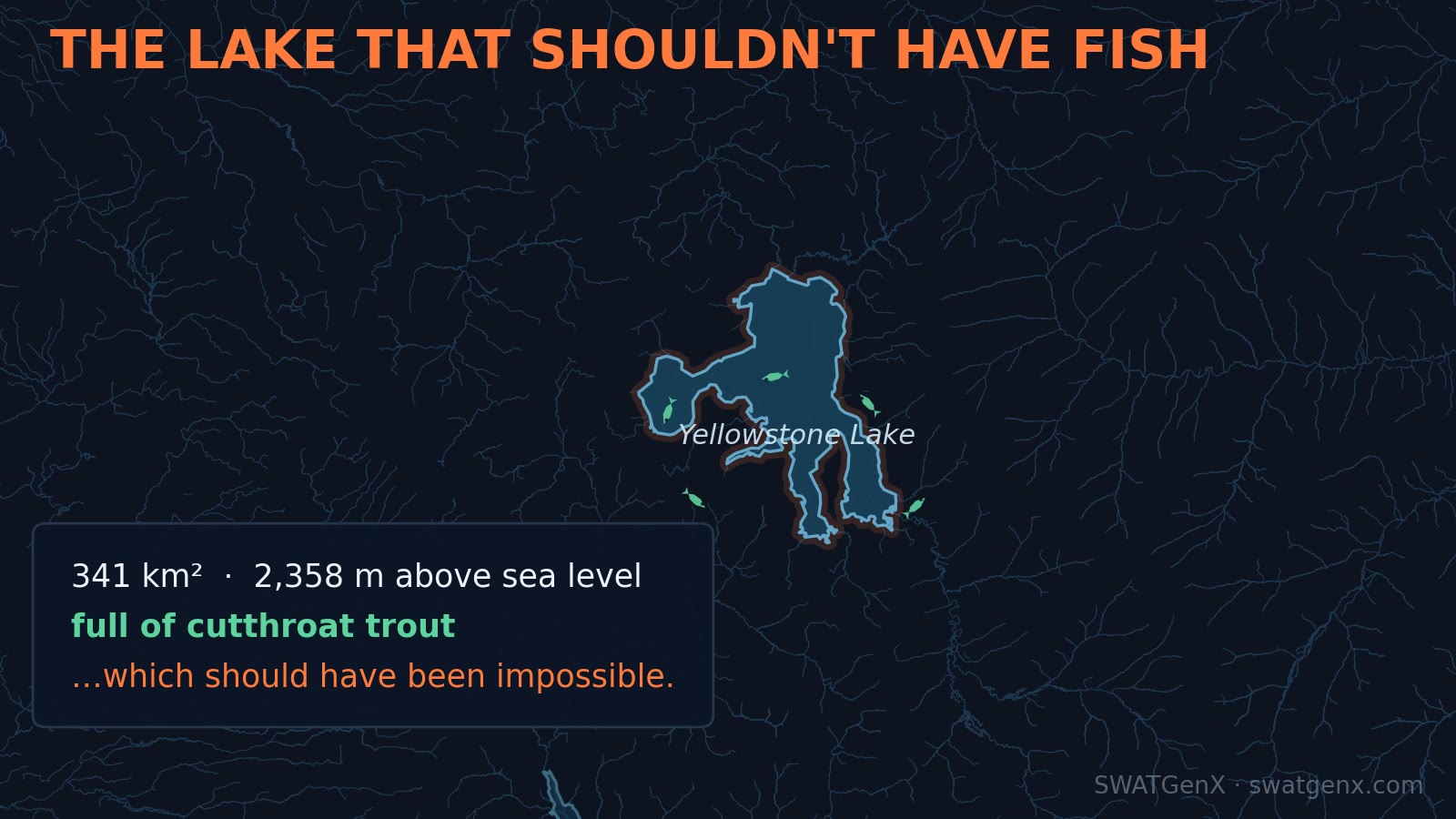
WatchThe Lake That Shouldn't Have Fish
Yellowstone Lake holds trout that could not have swum there. The elevation data explains how they arrived.
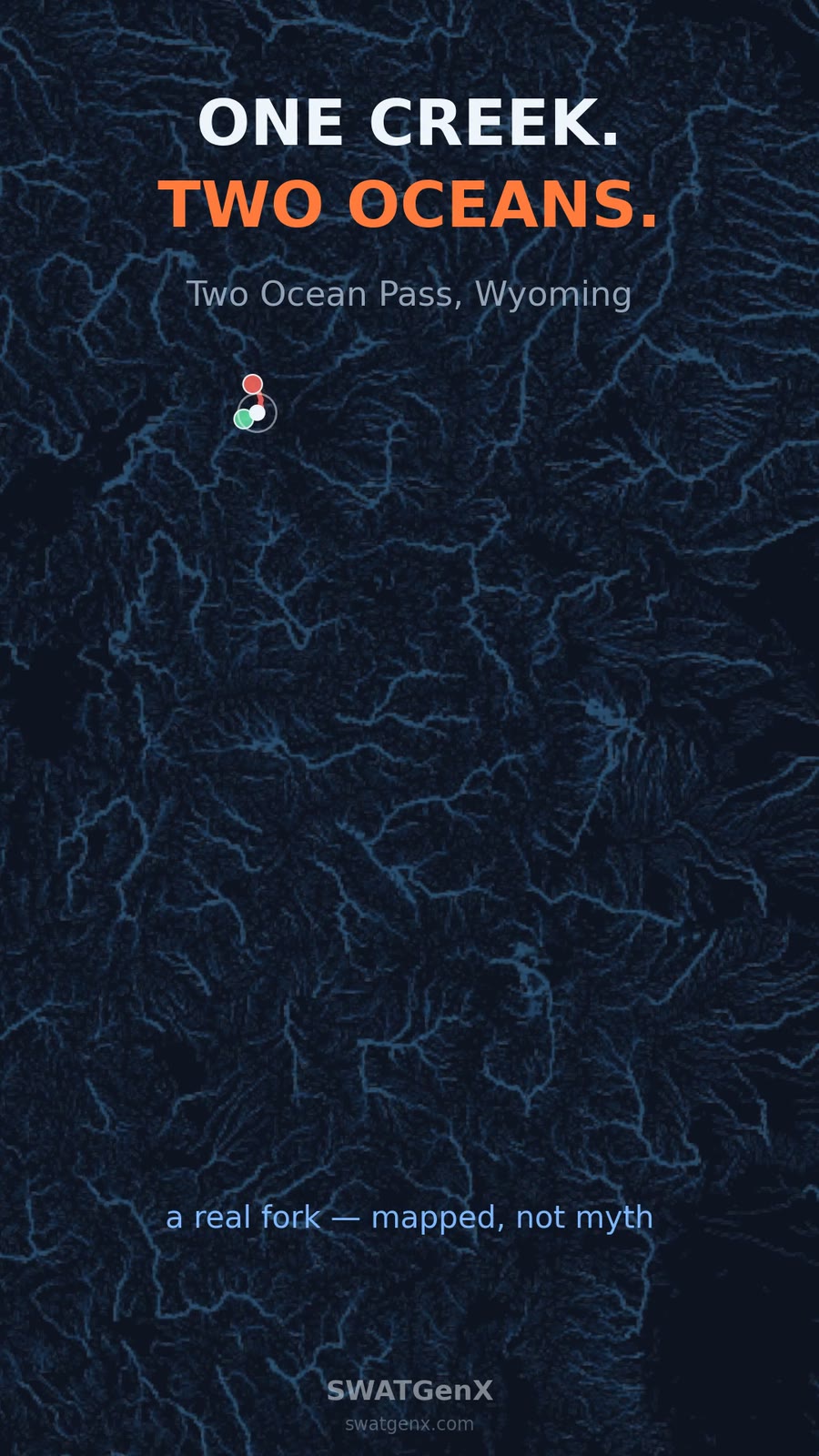
WatchOne Creek, Two Oceans — Two Ocean Pass, Wyoming
One creek in Wyoming splits toward two oceans. Both journeys traced, reach by reach.
WatchBuilding a watershed model
From a gauge number to a running simulation
What a watershed model actually is, how one gets assembled out of national data, and how to build and run the engine yourself.
How a SWAT+ Watershed Model Gets Built — From One Gauge Number
A real basin assembling itself from one USGS gauge number — terrain, soils, land cover and climate becoming a computational structure.
WatchWatershed modeling: a working guide
The concepts and the vocabulary — subbasins, HRUs, routing, calibration — in the order you actually meet them.
ReadCompiling SWAT+ for production
How we build the engine SWATGenX runs: NetCDF output, parallel execution, and the compiler flags that matter.
ReadSWATGenX: 3 Ways to Run a Watershed Model — Website, Python, and MCP for AI Agents
Three doors into the same platform: the website, the swatgenx Python package, and a public MCP server for AI agents.
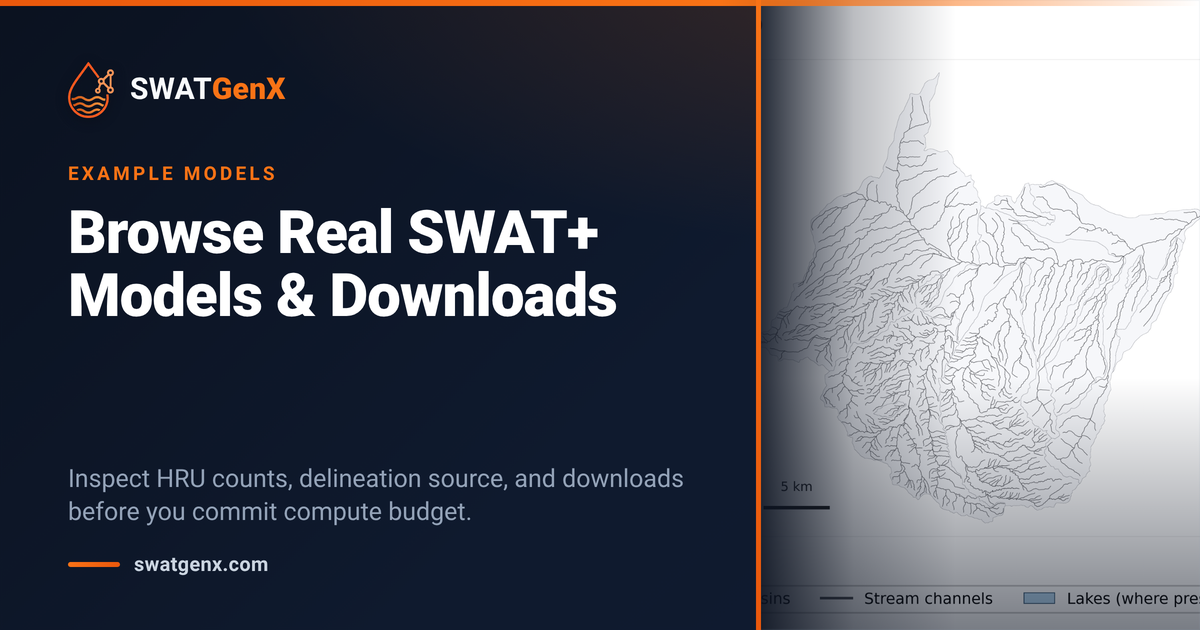
WatchReady-to-run example models
Download a complete, already-built SWAT+ model and open it in your own tools.
ReadGroundwater
The half of the water cycle you cannot see
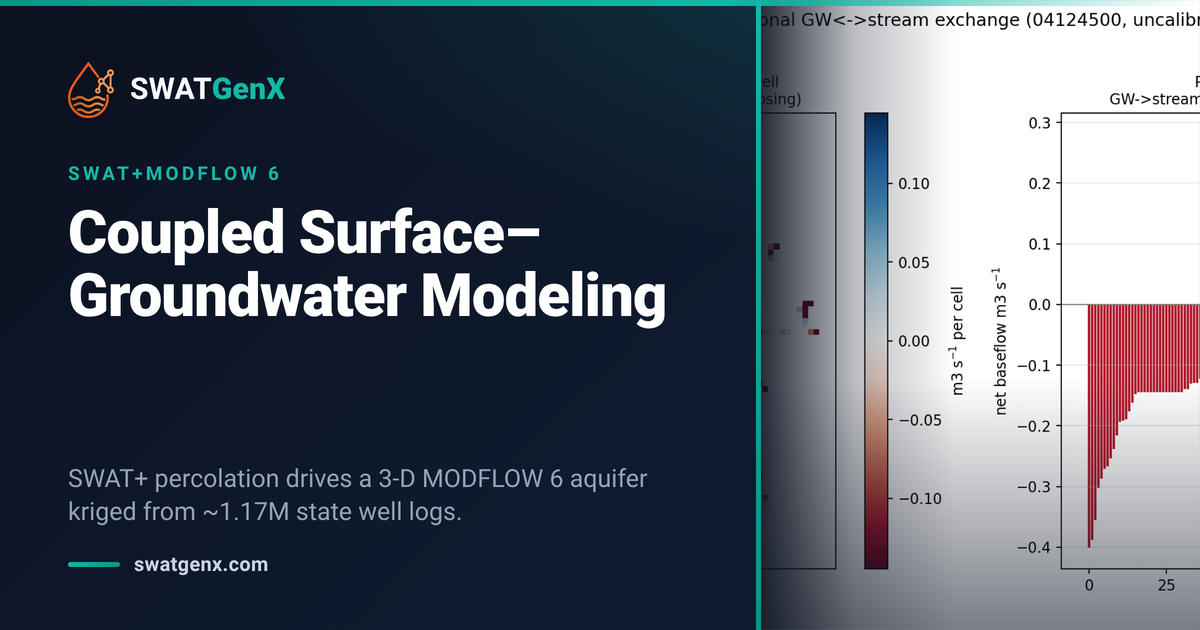
Why a river keeps flowing weeks after the rain stops, what is actually known about the rock beneath the country, and how surface water and groundwater are simulated together.
How SWAT+ Is Coupled With MODFLOW 6 — Surface Water Meets Groundwater
Stream–aquifer exchange, and how SWAT+ is coupled to MODFLOW 6 in-process with mass balance verified both ways.
WatchSWAT+ ↔ MODFLOW 6 coupling
The technical account of the coupling: the exchange variables, the time stepping, and what it makes possible.
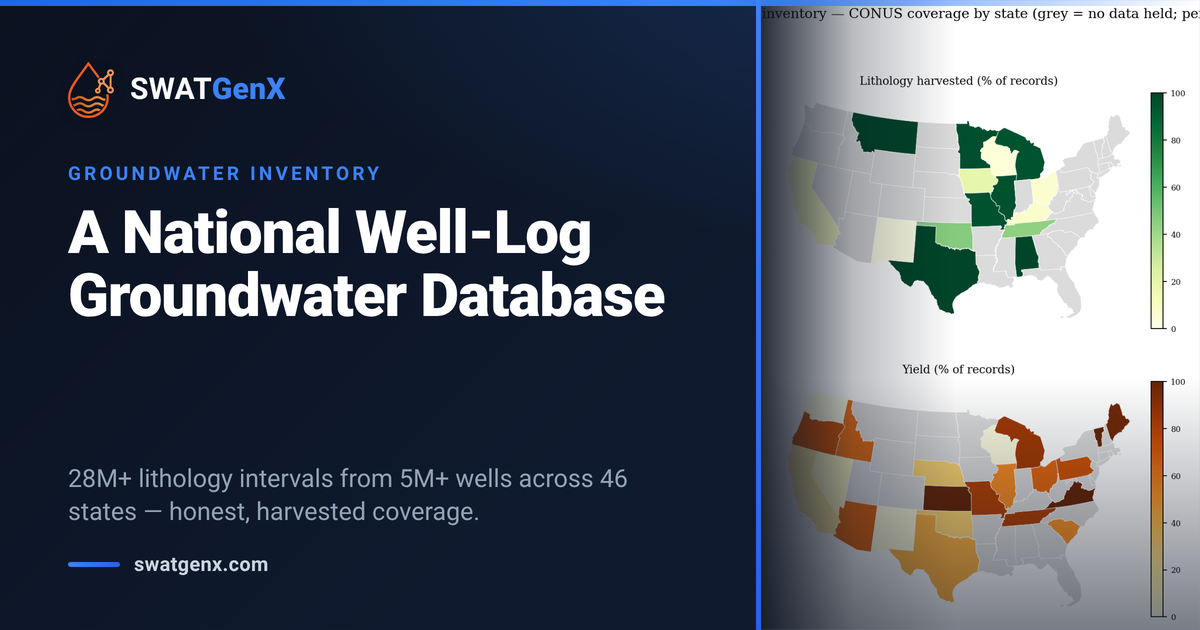
Read28.5 Million Layers: Assembling America's Groundwater Records
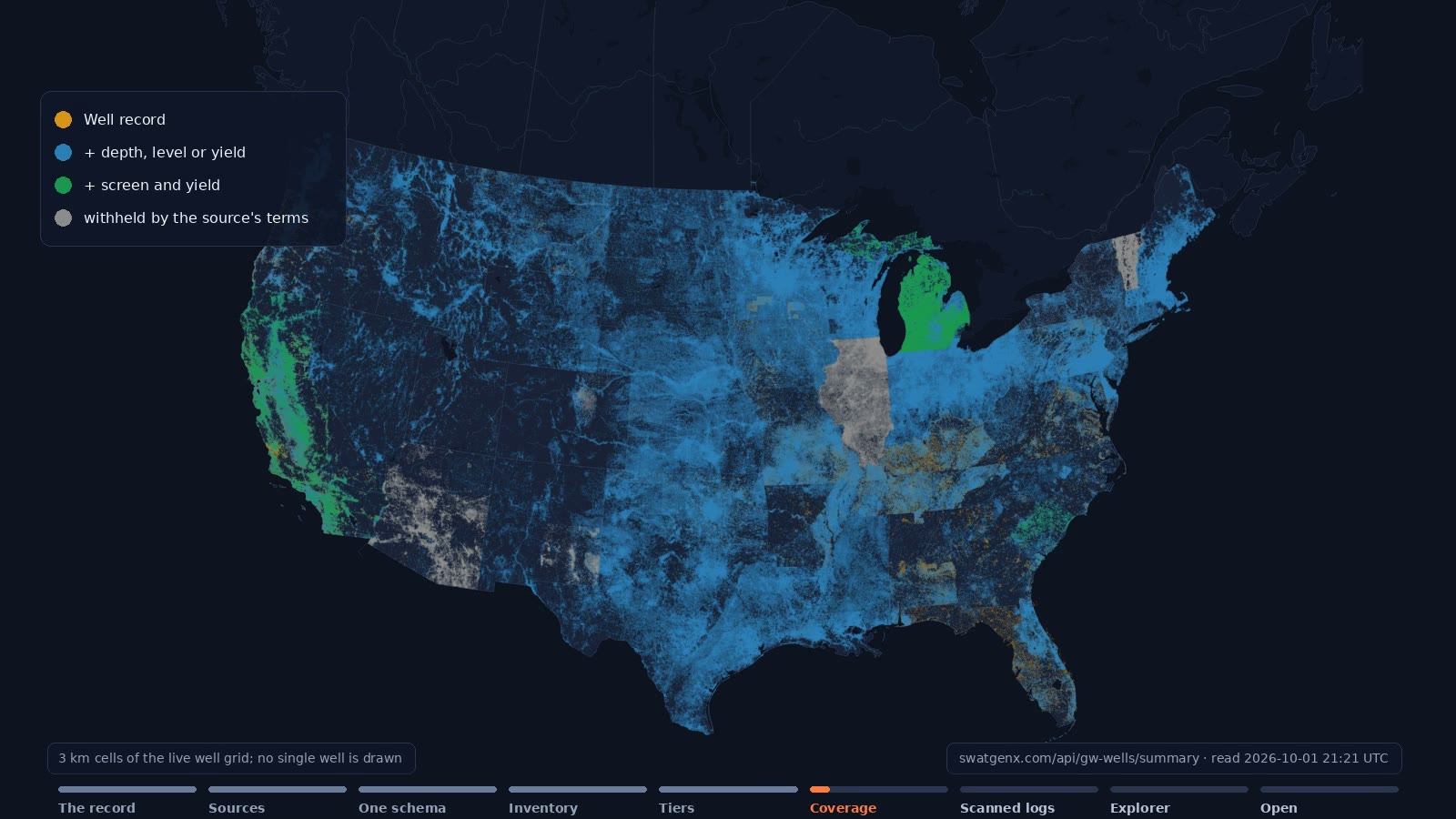
Every US water well leaves a driller's log. This is the story of assembling 28.5 million of those layers into one open inventory.
WatchThe national groundwater inventory
Explore what the inventory covers state by state, and download the open dataset.
ReadContaminants & water quality
What the water carries, and how far
Once you can model where water goes, you can model what travels with it. PFAS is the hardest case — persistent, mobile, and only explicable at watershed scale.
The PFAS Journey
Press play on 53 years: a plume grows under an old firefighting-foam site, every number from a real coupled model.
OpenSimulating PFAS From Soil to River: The Physics and the Model
What makes PFAS persist, what controls how fast it moves underground, and why the answer only exists at watershed scale.
WatchPFAS fate & transport: field guide
The full guide — chemistry, the mechanism in each compartment, the governing relationships, and a live 3D case study.
ReadComputation
Making the science run fast enough to be useful
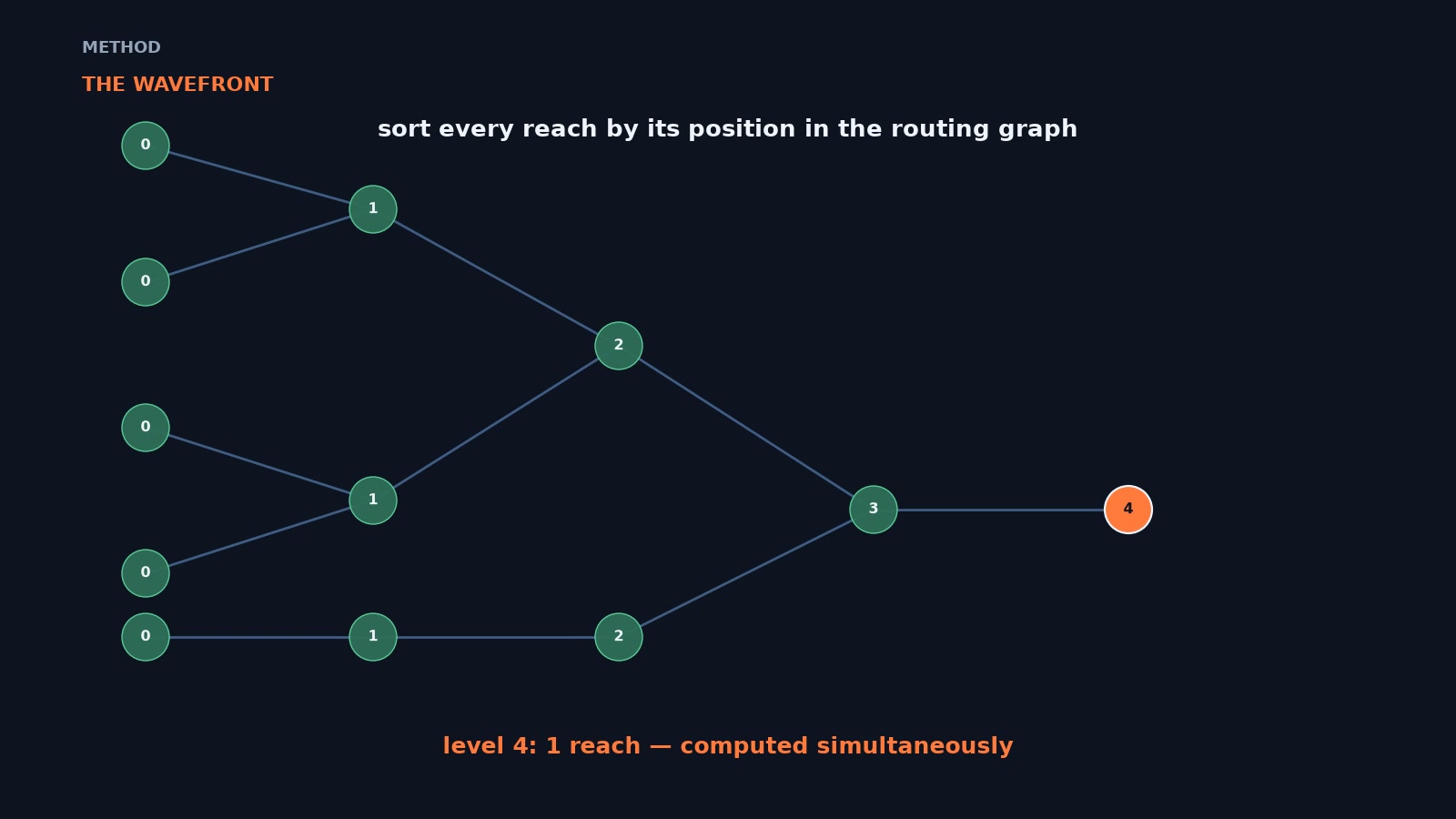
A model that takes a week to run cannot be calibrated. This branch is about the engineering that makes continental-scale simulation practical.
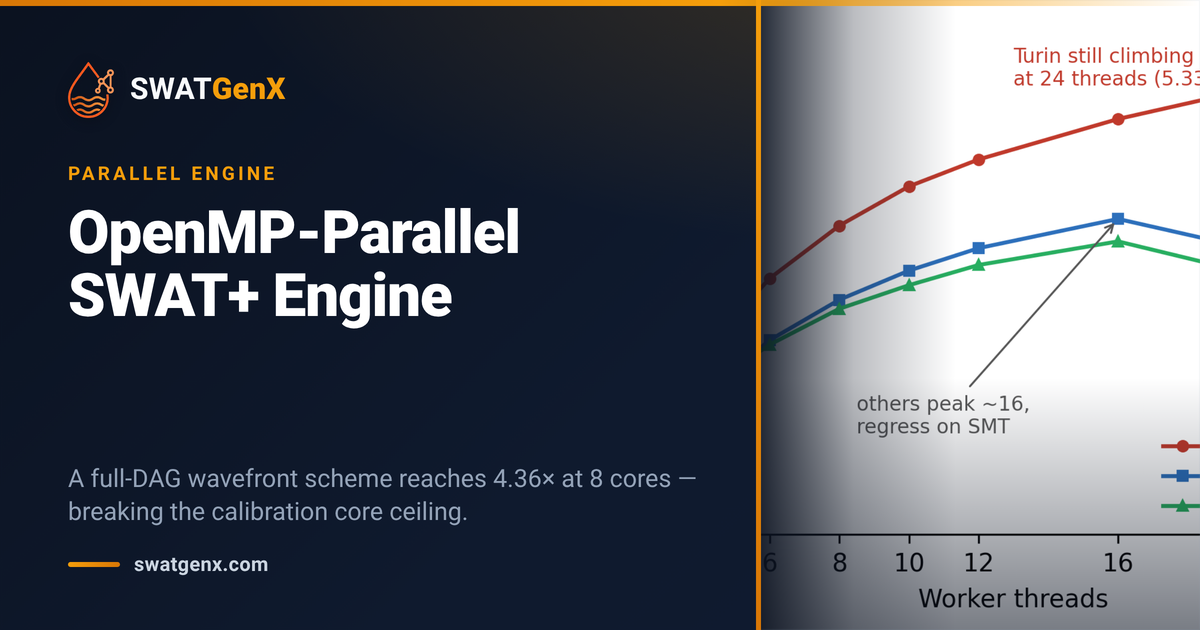
Why Watershed Models Are Slow — And How to Make Them 7× Faster
Why watershed models are slow, and the routing-graph structure that lets them use every core without changing the science.
WatchThe parallel SWAT+ engine
The wavefront over the routing DAG, the scaling results, and the byte-identical guarantee at every thread count.
ReadBranches in development
This curriculum grows as our simulations produce results worth walking through. These are the branches we are actively building — driven, like the rest, by our own model output rather than stock illustration.
Want the science these lessons come from? Explore the PFAS fate & transport guide, the Florida nonpoint-source showcase, or the methodology behind every model.