Everything on this platform is documented research: open national datasets with citable DOIs, an open accelerated modeling engine, and the coupled surface-water–groundwater methods behind them.
Data and code are released first — the manuscripts documenting each method carry an honest status label until they complete peer review.
Open national data
The datasets are the deliverable and the papers document the methods; each card says what can be downloaded today.
Preprint · Under peer review (2026)
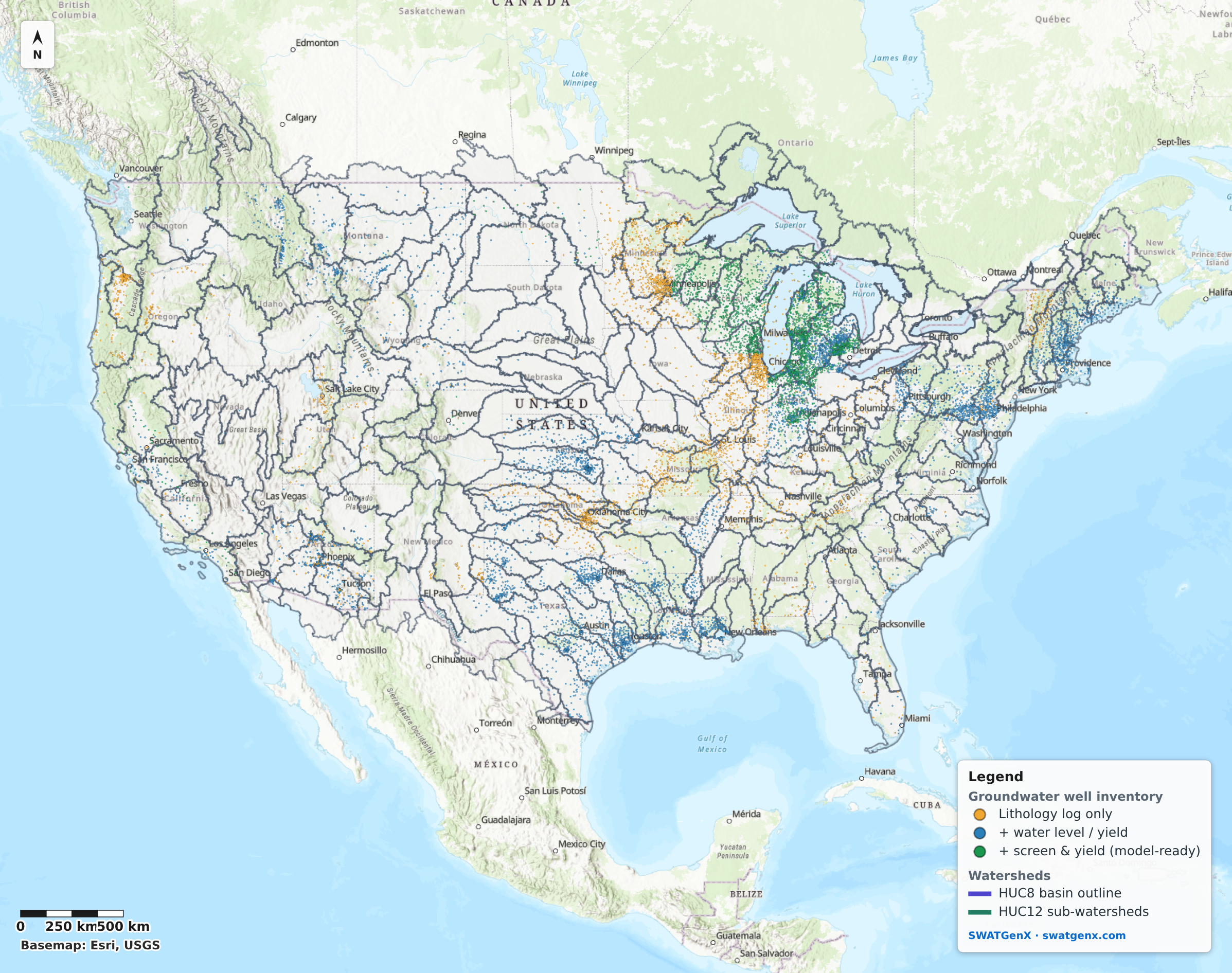
A national inventory of well lithology and hydraulics for the conterminous United States
A living CONUS well-lithology database harmonized from state agency sources — the subsurface layer that turns a watershed model into a groundwater model. Browsable on this site; the bulk files are released at publication.
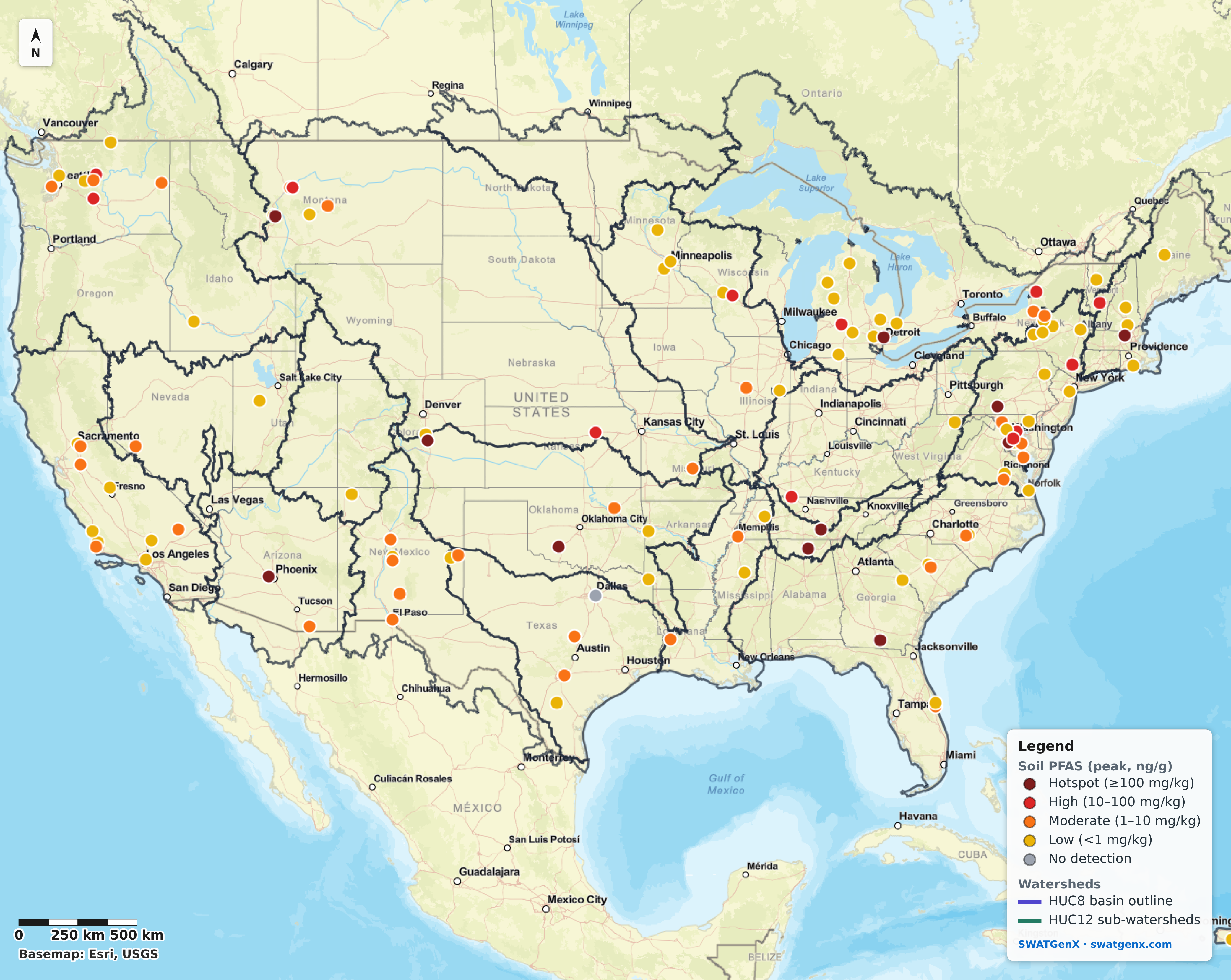
An open, depth-resolved inventory of measured soil PFAS concentrations
30,972 depth-resolved soil PFAS records from public agency reports across 39 states, Puerto Rico and the US Virgin Islands — the source-term layer for PFAS modeling. Cited by its DOI; bulk files embargoed through December 2026.
Coupled surface water – groundwater – PFAS modeling
Two-way SWAT+/MODFLOW 6 exchange carrying PFAS through soil, aquifer, and stream.
Not currently under review (2026)
Legacy groundwater sustains in-stream PFAS loads: the groundwater pathway via two-way coupled SWAT+/MODFLOW 6
A two-way daily coupling of SWAT+ and MODFLOW 6 carrying PFAS through both compartments — quantifying how much of the in-stream PFAS load arrives through legacy groundwater discharge rather than over the land surface.
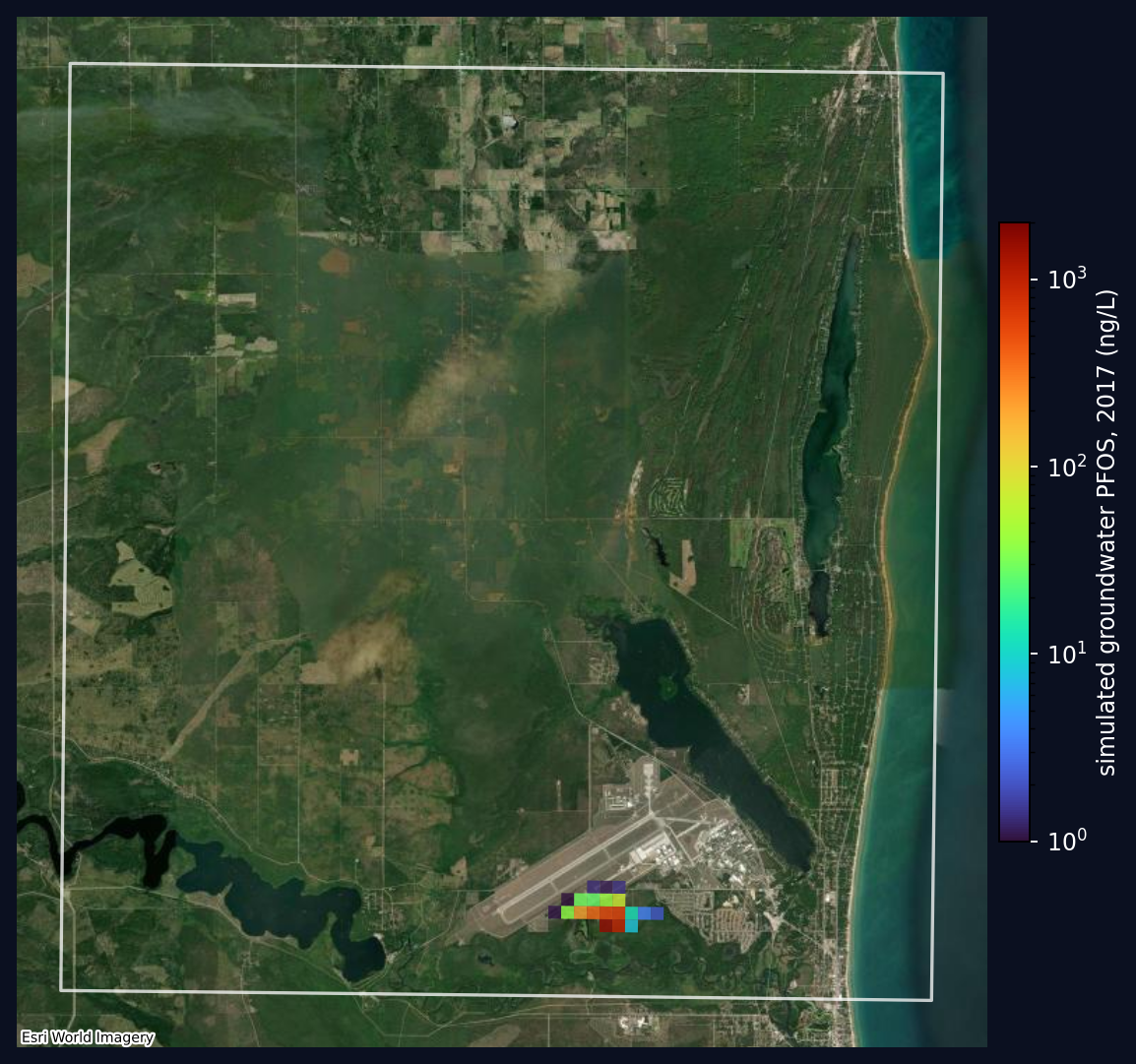
Wurtsmith AFB: from contaminated soil to aquifer to stream, 1971–2024
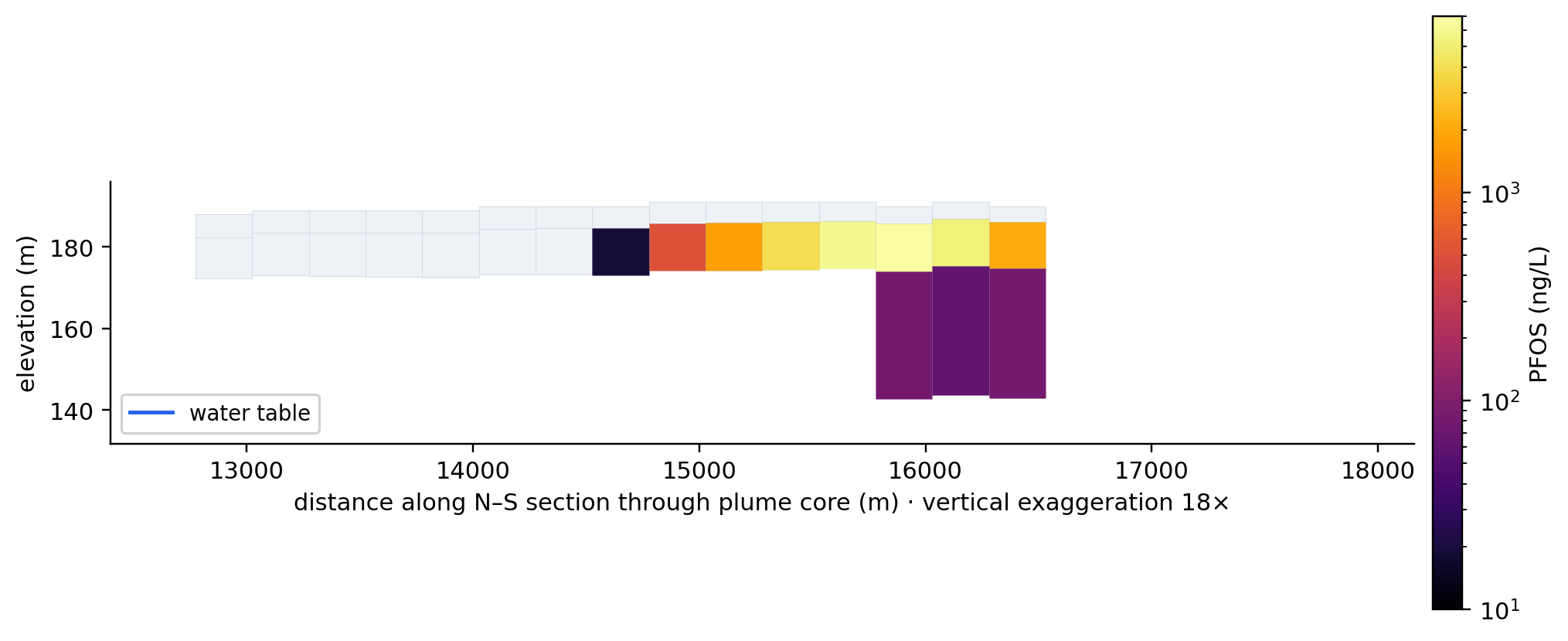
A five-decade coupled reconstruction of a legacy AFFF site — reproducing the "clean water table over a contaminated aquifer" enigma with measured soil concentrations as the only source term.
The model-generation pipeline and the accelerated open SWAT+ engine that runs it.
Not currently under review (2026)
Accelerating a regional hyper-resolution SWAT+ model without changing the science
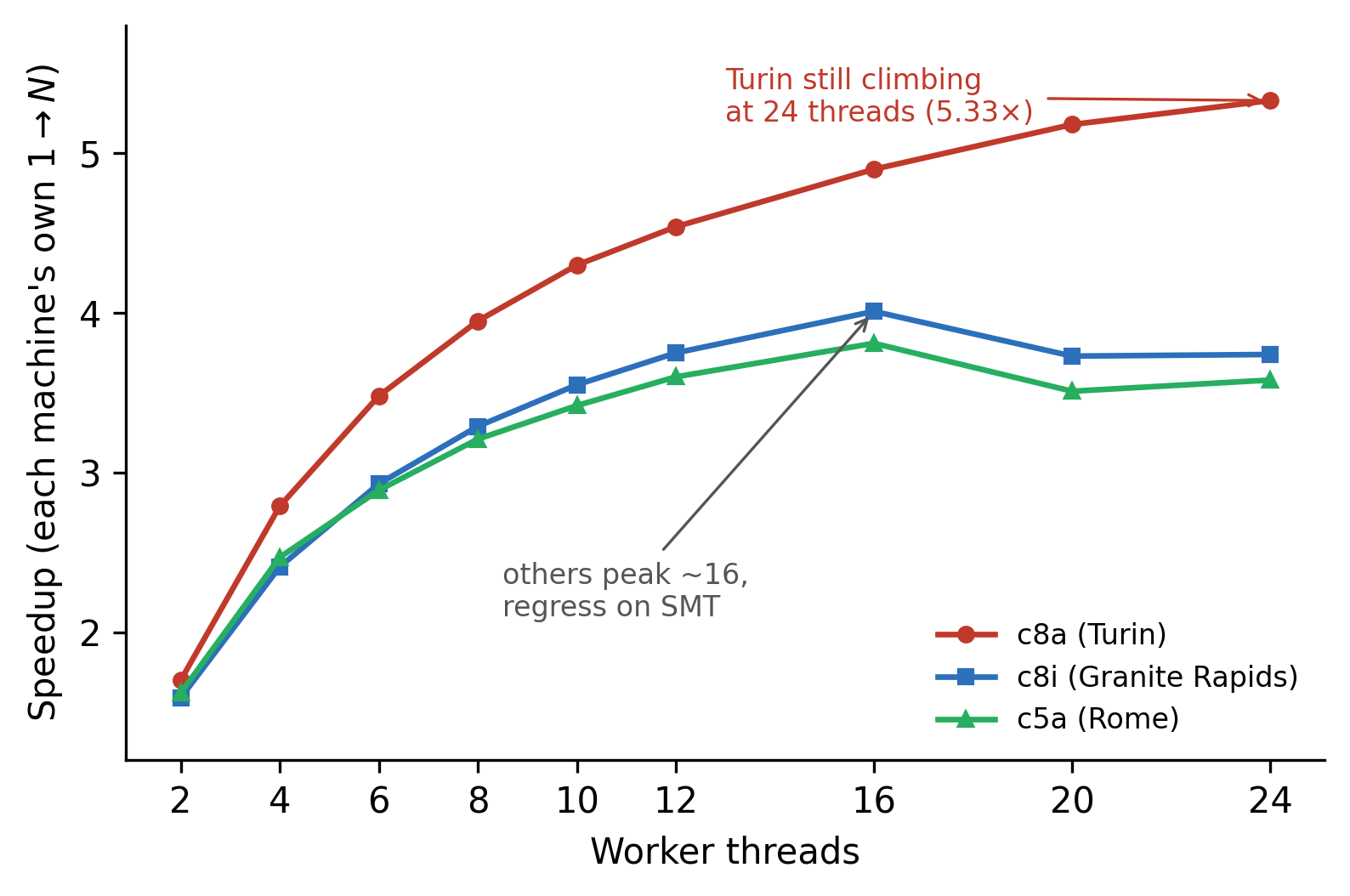
A reproducible profiling-to-parallelization methodology and a routing-aware shared-memory wavefront: up to 5.47× at 24 threads, 6.91× end to end versus our original single-core engine (larger against unmodified upstream), byte-identical to the serial engine in every comparison we ran. Open source.
Automating High-Resolution SWAT+ Watershed Model Generation from NHDPlus HR and National Environmental Datasets
Vahid Rafiei (2026) · ORCID. Available as a preprint on SSRN (Elsevier's early-stage research platform) while under peer review.
The paper describes how SWATGenX turns public national data into inspectable, downloadable SWAT+ setups: NHDPlus HR hydrography, catchment preparation, HRU delineation, climate and soils inputs, QA checks, and the reproducible pipeline that assembles them at CONUS scale.
Cite this work
Rafiei, V. (2026). Automating High-Resolution SWAT+ Watershed Model Generation from NHDPlus HR and National Environmental Datasets. SSRN. https://ssrn.com/abstract=7022809
The reproducibility repository also ships a CITATION.cff for automatic citation. Journal, volume, and DOI will be added on acceptance.
More from this author
Further work — including vadose-zone PFAS transport (see the Wurtsmith case study above) — is in preparation. Track new work on the SSRN author page or the ORCID record.